
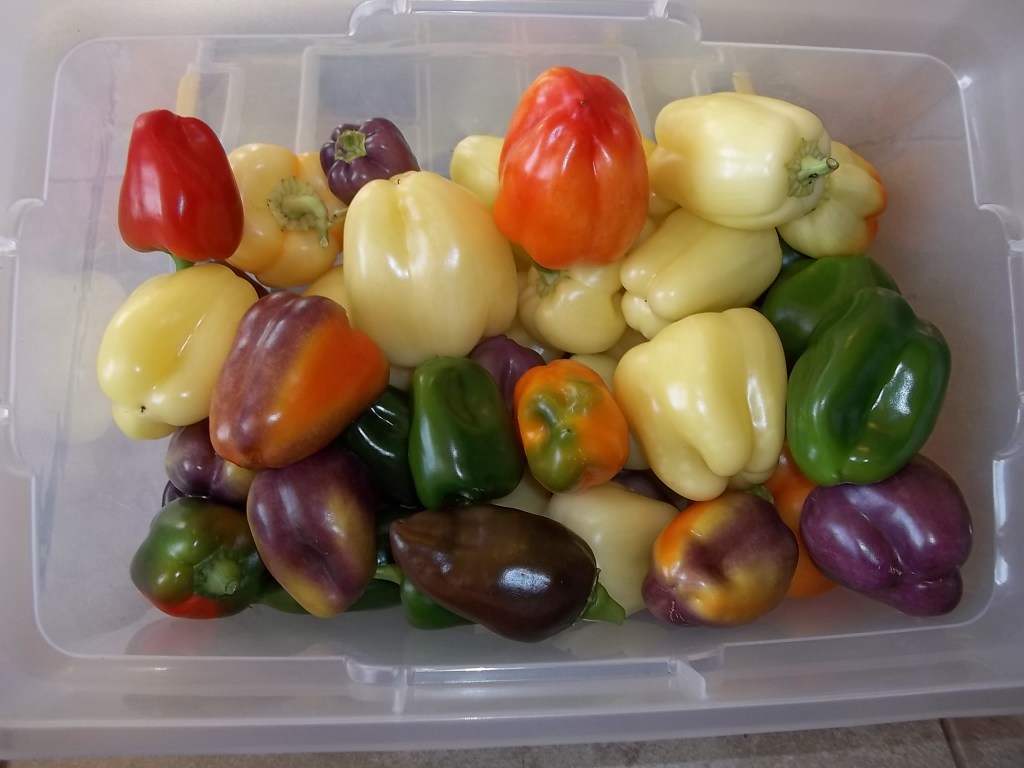
Over the years I’ve found that growing peppers in my vegetable garden has been a fun and rewarding experience. Peppers have a range of flavors and heat levels to fit almost everyone’s preferences. And despite being called a vegetable, peppers are botanically a fruit since they contain seeds. Peppers are also an often overlooked as an ornamental; as the fruit mature they will display a range of bright and gorgeous colors.
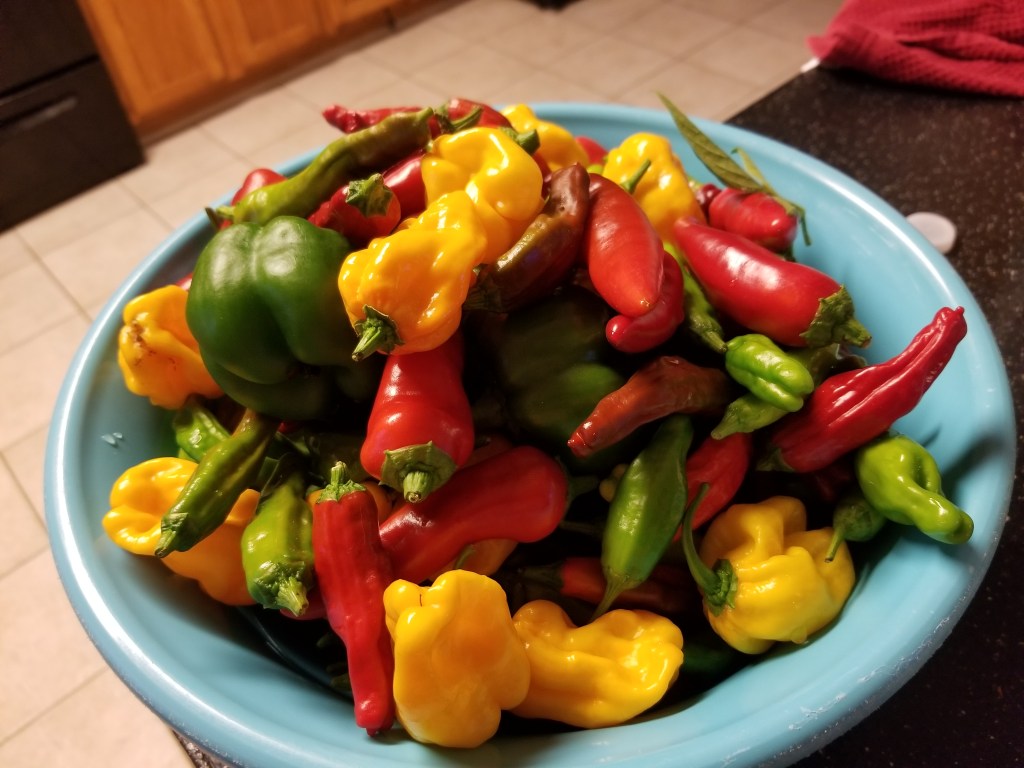
Whether you are a seasoned Master Gardener or a just learning, here are some of my best tips to help you successfully grow healthy and productive pepper plants.
Choose the right variety is important. There are many different types of peppers, and each has its own unique characteristics. Last year I grew 63 different varieties of peppers and I’ll discus in a future post.

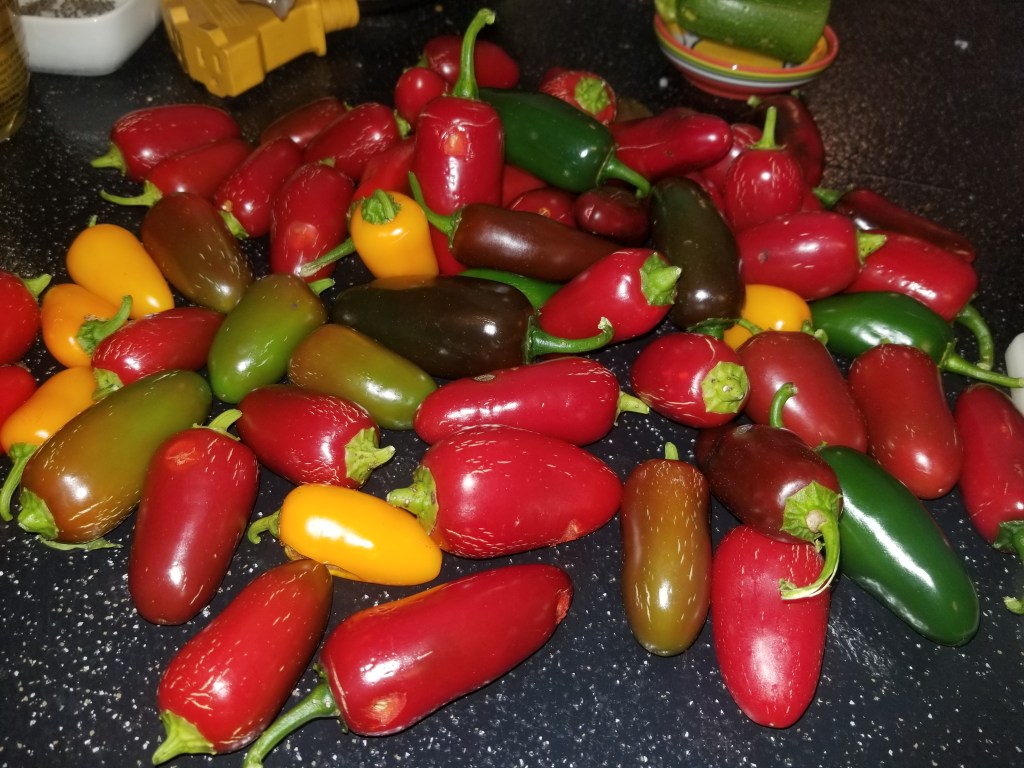
Choose a variety that suits your taste and heat preferences. Pepper heat is rated in Scovilles. Bell peppers are 0 Scovilles while Ghost peppers are 1,000,000 and greater. And there’s lots of variety in between. Some popular varieties include bell peppers, jalapenos, banana peppers, and habaneros.
Provide the right growing conditions:
- Full sun is required for the best production, 6 to 8 hours of direct full sun
- Peppers love the heat of the summer season. Don’t try to get a jump on the season by planting early as the pepper roots like warm soil. I always wait to plant my peppers in May and June
- Whether you plant in containers or in-ground, good drainage crucial as peppers do not like wet feet. .
Start your plants indoors:
- Peppers can be started from seed indoors 6-8 weeks before you plant to transplant into the garden.
- I always is a quality, professional growing mix. These mixes will be consistently moist and well-drained.
- A tip I’ve learned from Native Seed Search to enhance germination is to soak the pepper seeds for 24 hours. This is especially for some of the hot pepper varieties.
- Once the seedlings have developed their second set of true leaves, I always transplant into larger containers before finally moving them into the garden.
Peppers are heavy feeders and benefit from regular fertilization. I like to use a balanced controlled-release fertilizer and supplement with water-soluble as I water the pepper plants through the season.
Consistent moisture, just like with tomatoes, is key to growing pepper plants. Peppers that go through wet and dry cycles will not be productive producers.
When to harvest peppers is always a popular question. The fruit can be harvested at any point. Pepper fruit all start out as green but the best flavors develop as the fruit begins to display colors.
These basic tips will help get you started to enjoy nice homegrown peppers this year.
 Gary Grows at Heritage Cottage