Since we are celebrating Easter this weekend, and in Mississippi Good Friday is the go date to plant your warm season veggies (even though there is a 6 week swing with Good Friday, I wrote a blog about that, The Moon, the Cross and Tomato Planting on Good Friday , this is a good time to tackle planting tomatoes in containers.
This year Good Friday coincides with the 90% frost free date on the Mississippi Gulf coast. I think it’s appropriate to share my 10 non-negotiable tips for growing tomatoes in containers.
It’s really kind of funny. I don’t even like fresh tomatoes. I have harvested 1000 pounds of tomatoes from my small urban farm.
So buckle up, clench those tomato gardening pearls if you must, I won’t unfriend you if you do 😉
Gary’s 10 Non- negotiable Rules for Growing Tomatoes in Containers
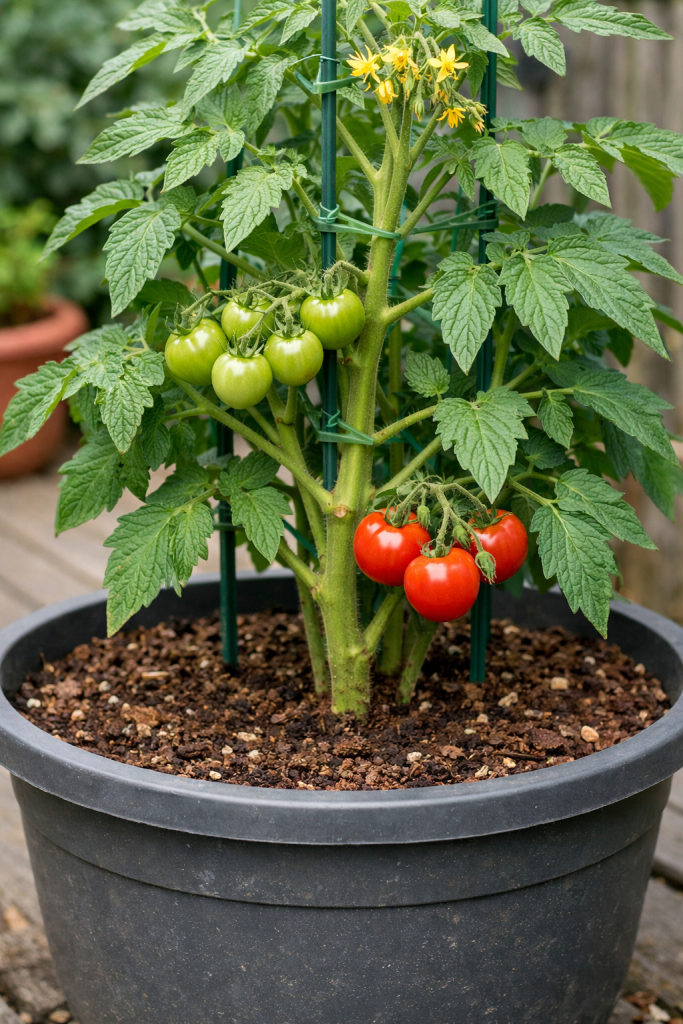
Rule 1 – Start with a Container Big Enough
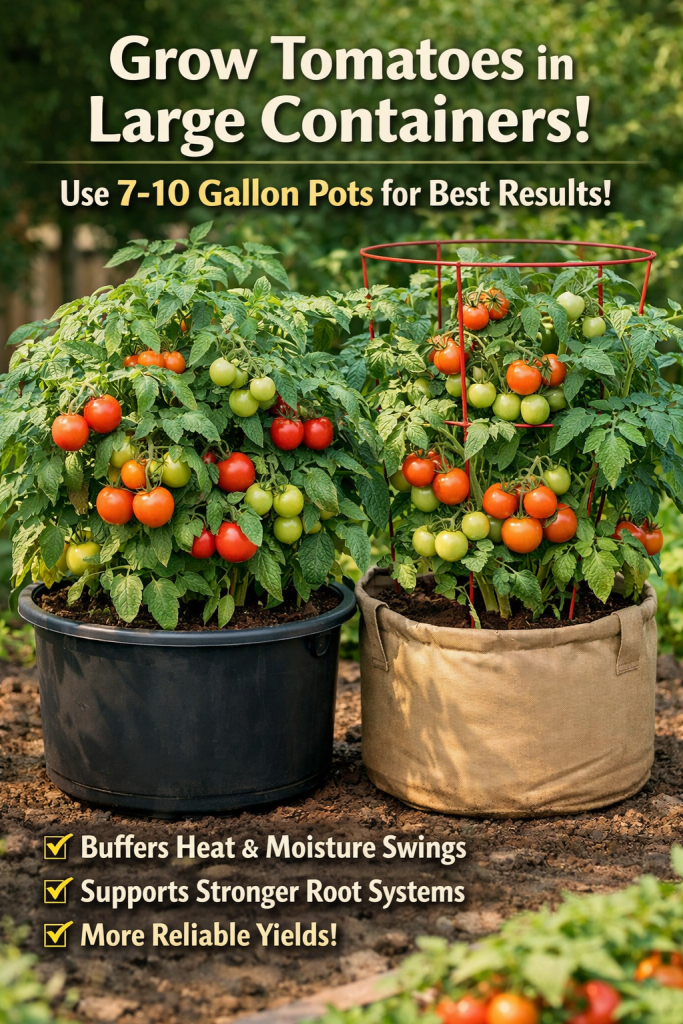
All tomatoes, whether determinate or indeterminate, work best in at least 5-gallon containers, bigger is even better. Larger containers buffer heat and moisture swings, supporting stronger root systems and more reliable yields.
Gary’s Garden Note: A gardener once told me his tomato “just quit producing.” The plant looked great—until I saw the one-gallon container it was growing in. By midsummer the roots had nowhere left to go.
Rule 2 – Leave Garden Soil in the Garden
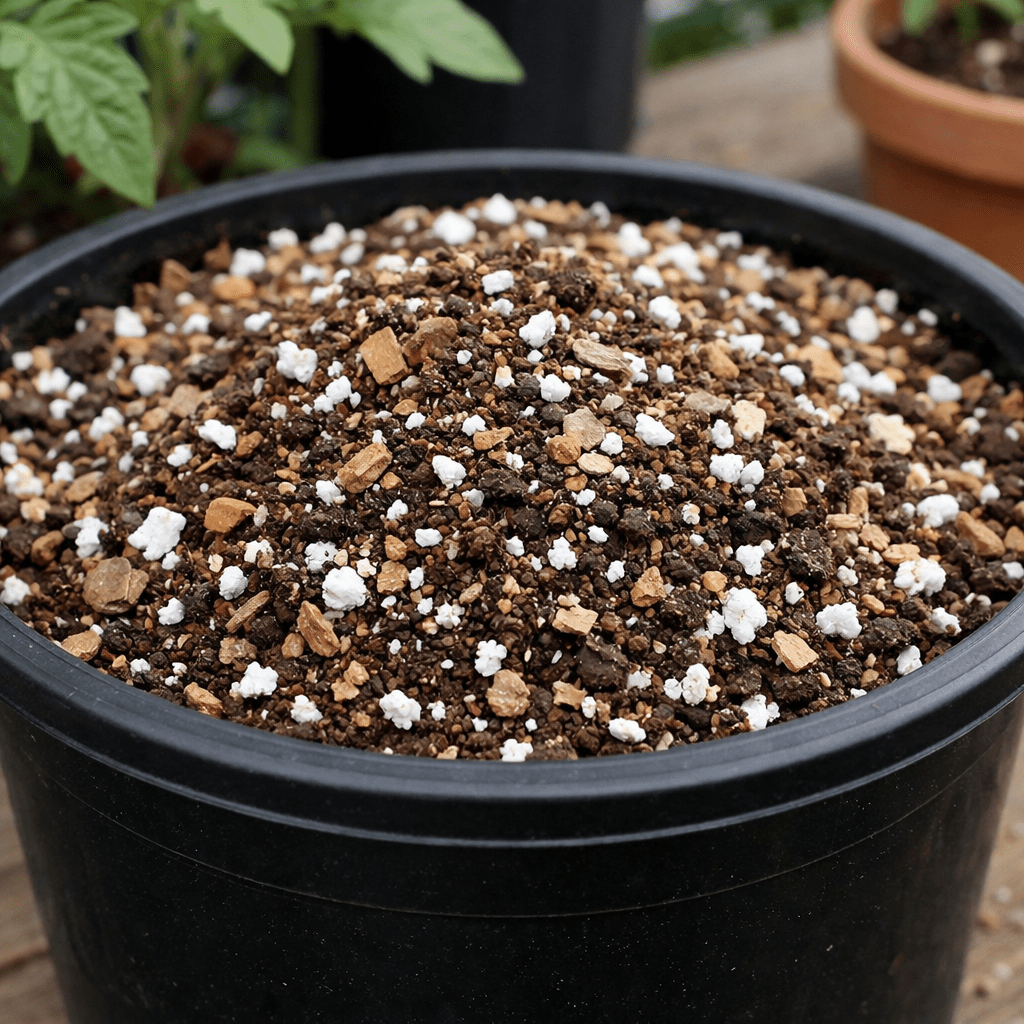
Use a well-drained professional container mix that is designed and engineered for containers. Garden dirt and other added components compact in pots. They restrict oxygen movement. This compaction keeps the container waterlogged and restricts root growth.
Gary’s Garden Note: I once watched someone proudly fill containers with soil from their yard to save money. By July the surface had hardened like brick. Roots need air more than thrift.
Rule 3 – Plant Deep
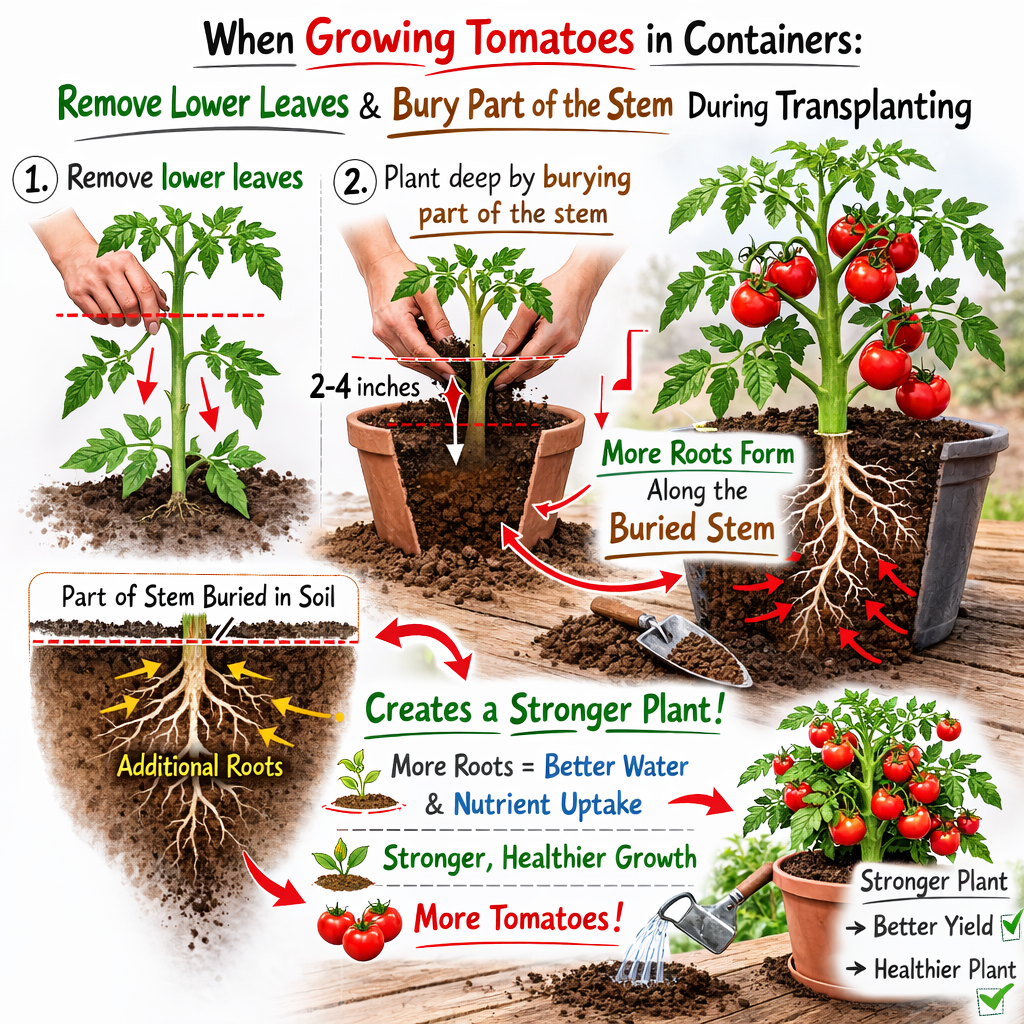
Remove lower leaves and bury part of the stem during transplanting. Tomatoes form extra roots along buried stems, creating a stronger plant.
Gary’s Garden Note: Those tiny bumps along the stem? They are future roots waiting for soil and moisture. Tomatoes reward gardeners who understand their habits.
Rule 4 – Water Consistently
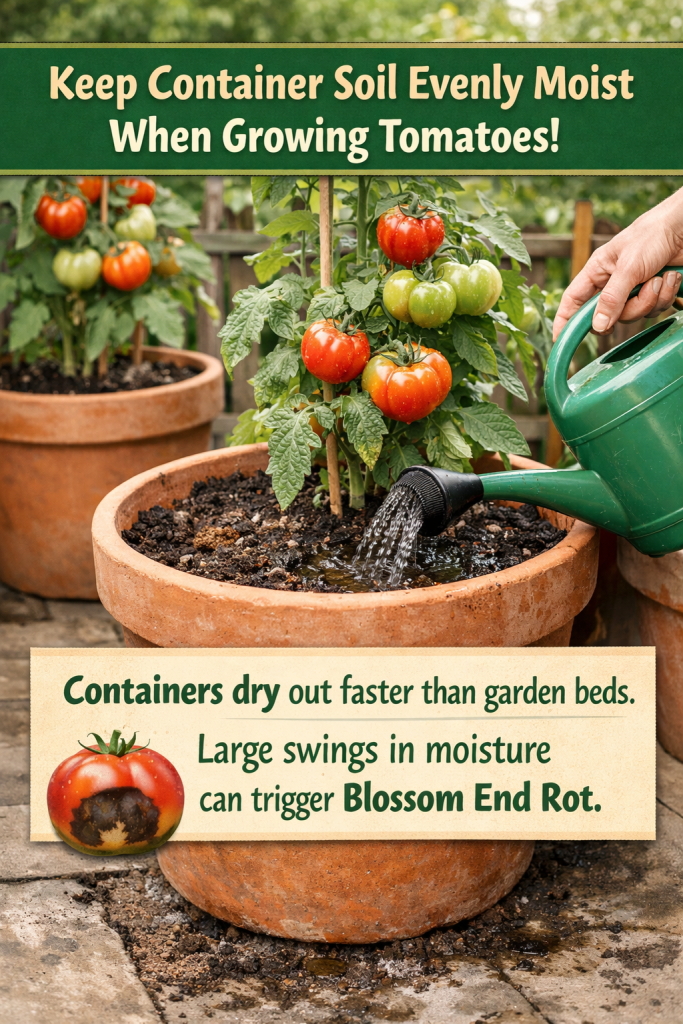
Keep container soil evenly moist. Containers, especially small ones, dry faster than garden beds. The cycles of dryness and moisture interrupt cellular calcium transport. This interruption is a major cause of blossom end rot.
Gary’s Garden Note: Many gardeners buy blossom end rot control products. Calcium applied to foliage stays in the foliage. Calcium is taken up through the roots. Most of the time the real fix is simply consistent watering rhythm.
Rule 5 – Feed on a Schedule
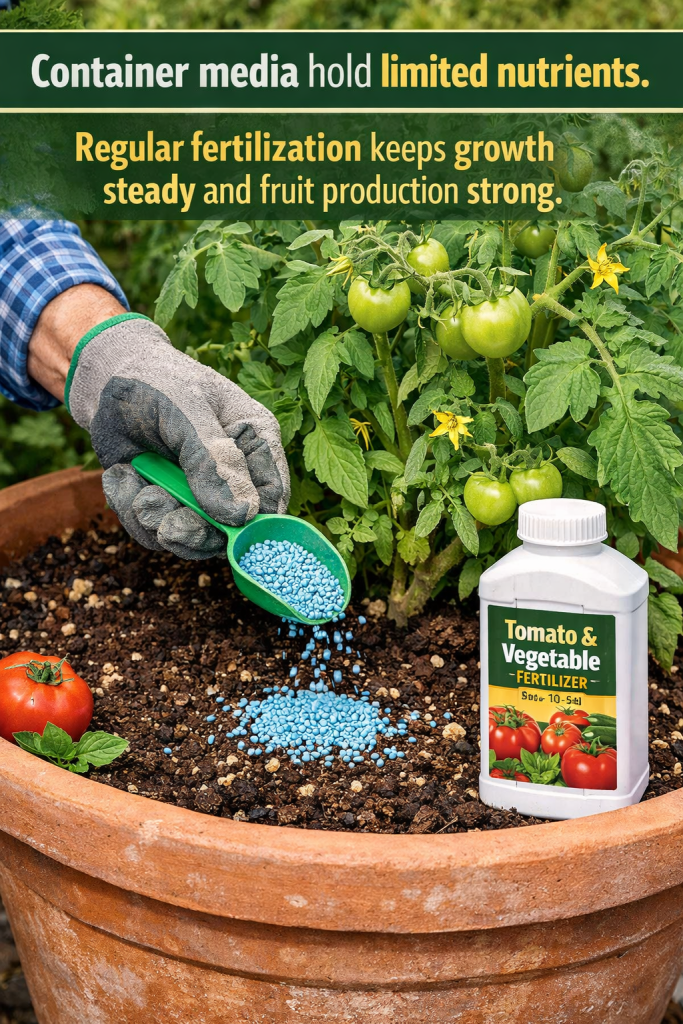
Professional container mixes due to their cation exchange properties hold limited nutrients. Regular fertilization of container grown tomatoes keeps growth steady and fruit production strong.
Gary’s Garden Note: Container tomatoes remind me of teenage boys—steady appetites and no pantry of their own.
Rule 6 – Provide Full Sun
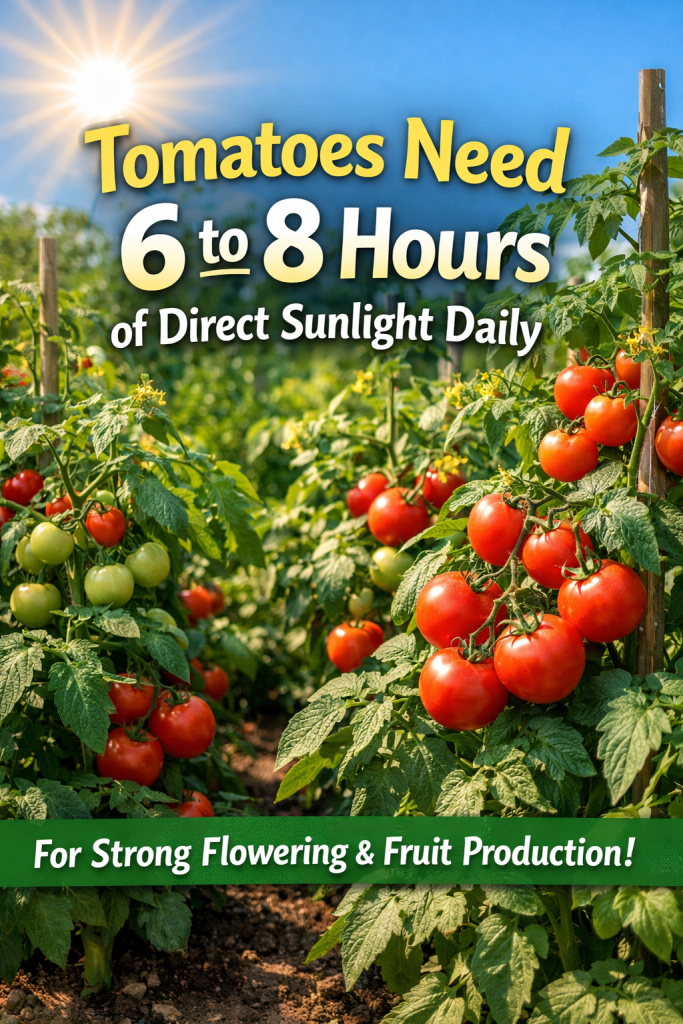
Tomatoes need six to eight hours of direct sunlight daily for strong flowering and fruit production.
Gary’s Garden Note: I once saw a lush tomato plant beside a porch column—beautiful foliage but almost no fruit. Shade was the real problem.
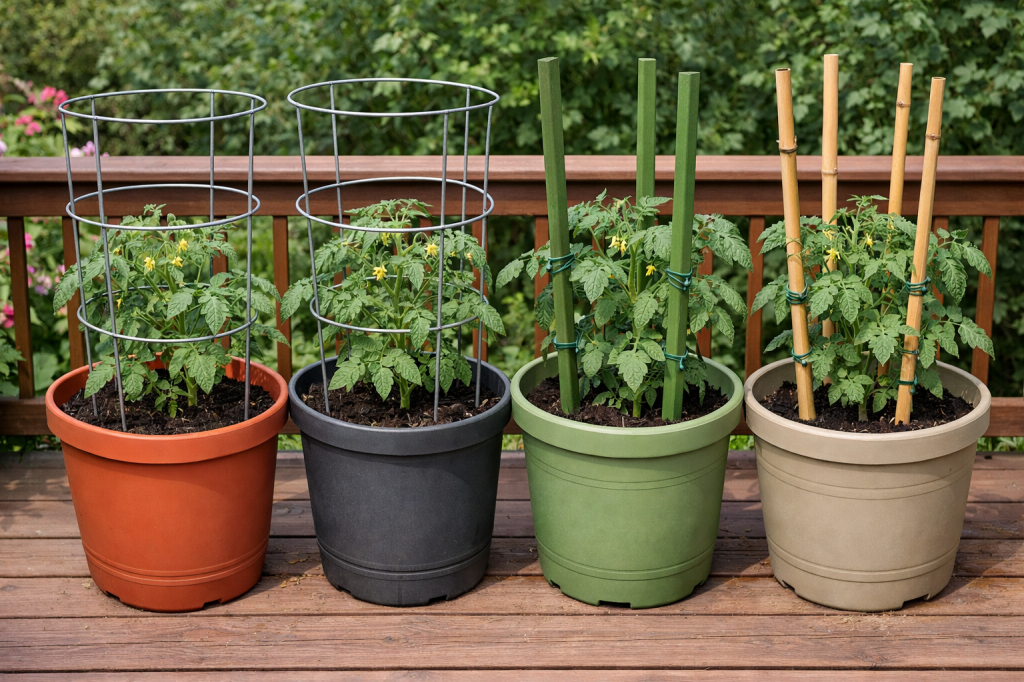
Rule 7 – Install Support Early
Place cages or stakes at planting time so roots are not disturbed later as plants grow.
Gary’s Garden Note: Sliding a cage over a sprawling tomato rarely ends gracefully—for the gardener or the plant.
Rule 8 – Prune with Intention
Remove leaves touching soil and selectively manage suckers. Avoid excessive pruning in hot climates.
Gary’s Garden Note: One gardener proudly told me they pruned heavily for airflow. July sun quickly reminded him that leaves also give shade.
Rule 9 – Root Zone Temperature and Thermal Mass
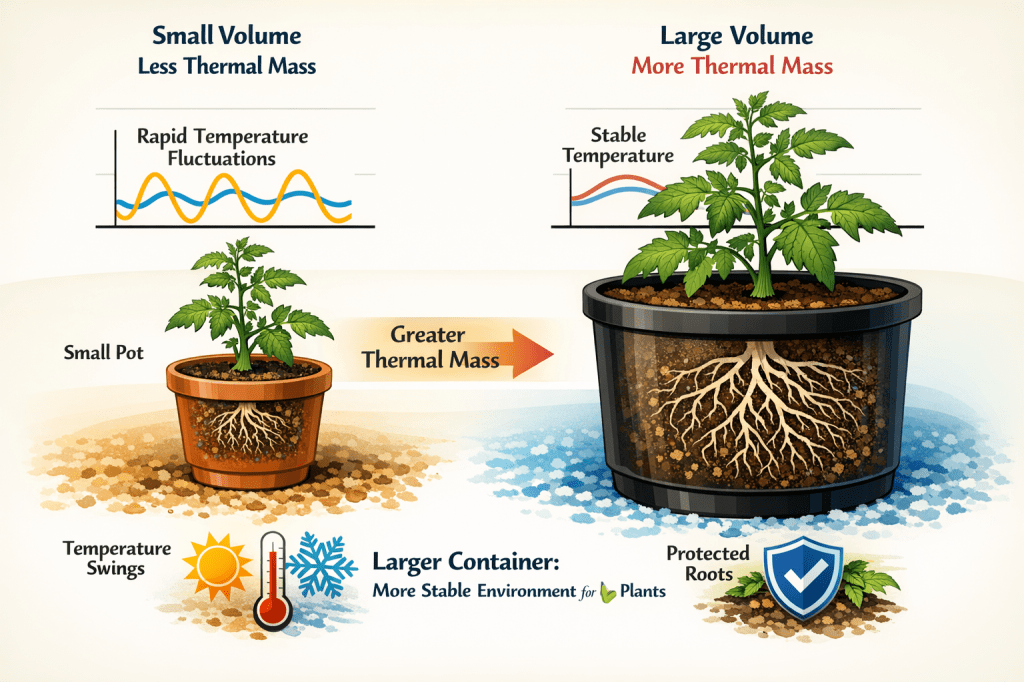
Small containers heat and cool quickly because they contain very little soil mass and water holding capacity. Conversely, larger containers hold more growing media and moisture. This creates greater thermal mass that slows temperature change and protects the root system. This works both in summer AND winter when the temperatures are going in different directions.
Gary’s Garden Note: In commercial nurseries, millions of plants grow in black plastic pots. The key differences are volume and irrigation. Larger containers with well-watered media buffer heat in summer and slow temperature loss in winter.
Rule 10 – Watch Weekly
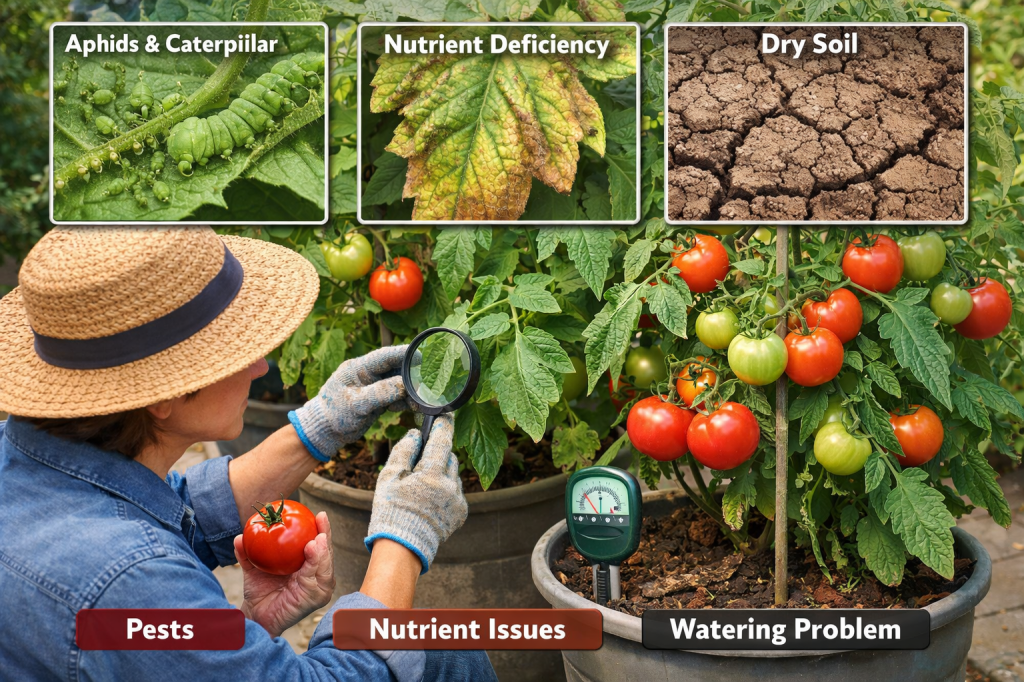
Walk around your garden with a cup of coffee on a regular basis. Regular inspection catches pests, nutrient deficiencies, and watering problems early.
Gary’s Garden Note: The most productive gardeners I know simply notice things sooner—before small issues become big ones.