

The Urban Farm: Chapter 9
One of the best parts of an urban farm is growing what you want—not what the garden center happens to have.
Gardening becomes easier and more enjoyable when decisions are made ahead of time instead of in response to problems.
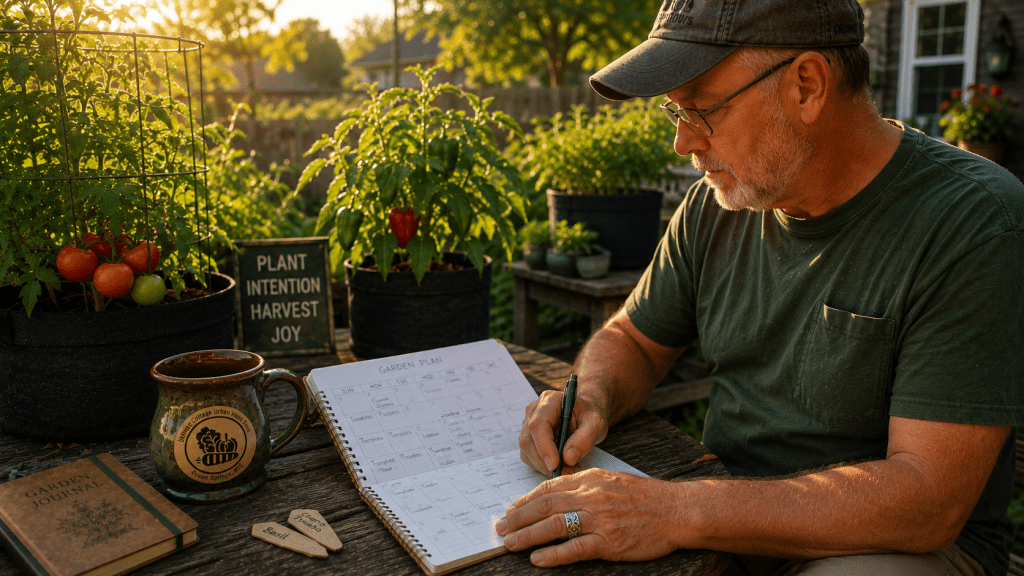
Gardening feels easier when fewer decisions are made in the moment.
Most frustration in small-space gardening doesn’t come from lack of effort. It comes from reacting—responding to problems after they appear, scrambling to adjust when plants struggle, and trying to fix issues that could have been prevented with a little forethought.
Planning doesn’t make gardening rigid. It makes gardening calmer.
In an urban farm, where space is limited and every container matters, planning is the difference between a crowded collection of plants and a productive system.
Gary’s Garden Note
Planning doesn’t remove spontaneity — it removes stress.
Why Planning Matters More in Small Gardens
Large gardens can absorb inefficiency.
Extra plants can sprawl. Missed plantings can be overlooked. Mistakes are diluted by space. Container gardens don’t have that luxury.
In small spaces:
- Every container has a cost
- Every plant competes for light
- Every decision is visible
- Planning helps ensure that space is used intentionally instead of accidentally.
This doesn’t mean locking yourself into a rigid plan. It means thinking ahead just far enough to avoid obvious conflicts and missed opportunities.
Gary’s Garden Note
Good planning creates flexibility — not restriction.
Start With What You Want, Not What You Can Grow
One of the most common planning mistakes gardeners make is starting with possibility instead of preference.
They ask, “What can I grow here?”
A better question is, “What do I want to harvest?”
When planning begins with desired harvests, everything else falls into place more easily:
- Crop selection becomes clearer
- Container size decisions simplify
- Scheduling becomes purposeful
A garden built around real meals is more satisfying than one built around curiosity alone.
Gary’s Garden Note
Gardens that feed people last longer than gardens that impress them.
Think in Seasons, Not Months
Plants respond to temperature and day length—not calendars.
Planning by season rather than month allows gardeners to adapt to yearly variation without feeling behind or rushed.
In most climates, container gardens move through:
- Cool-season planting
- Warm-season planting
- Peak summer production
- Late-season transition
Understanding these seasonal rhythms allows gardeners to rotate crops, refresh containers, and extend productivity.
Gary’s Garden Note
Seasons set the pace — gardeners just keep time.
Succession Planting in Containers
One of the most powerful planning tools in small gardens is succession planting.
Rather than filling every container once and waiting for the season to end, succession planting replaces finished crops with new ones.
Examples include:
- Replacing spring greens with summer peppers
- Following early herbs with late-season lettuces
- Removing spent plants to reset containers
This approach keeps containers productive longer and makes the most of limited space.
Gary’s Garden Note
A container doesn’t have to rest just because a plant is done.
Planning for Growth, Not Just Planting
Plants don’t stay the size they are on planting day.
Effective planning accounts for mature size, not seedling size. Crowded containers may look full early, but competition quickly reduces productivity.
Planning for growth means:
- Allowing space for canopy expansion
- Anticipating vertical growth
- Avoiding shading conflicts
- Plants that start with room to grow rarely need rescuing later.
Gary’s Garden Note
Crowding early always costs later
Mapping Light Patterns
Sunlight is the most valuable real estate in an urban garden.
Light changes throughout the season as the sun shifts and plants grow. A container that receives full sun in spring may be shaded by midsummer.
Simple observation helps:
- Notice where shadows fall
- Track how long light lasts
- Adjust container placement
Containers allow for movement. Planning takes advantage of that flexibility.
Gary’s Garden Note
Sunlight moves — gardens can too.
Scheduling Maintenance, Not Just Harvest
Planning often focuses on planting and harvest dates, but maintenance matters just as much.
Watering, feeding, pruning, training, and monitoring all take time. A garden that requires more attention than you can provide becomes stressful.
Planning helps match garden size to available time.
Gary’s Garden Note
A garden should fit your life — not compete with it.
Avoiding the “All at Once” Trap
One of the most common scheduling mistakes is planting everything at once.
This often leads to:
- Overwhelming harvests
- Peak maintenance demands
- Burnout
Staggering plantings spreads the work and harvests over time. It also reduces risk—if one planting struggles, others may succeed.
Gary’s Garden Note
Staggered planting spreads success.
Planning for Failure Without Expecting It
Even the best plans encounter surprises.
Weather changes. Plants fail. Pests appear. Planning doesn’t prevent these issues—it prepares you for them.
Leaving space for adjustment allows gardeners to respond without frustration. Empty containers aren’t failures; they’re opportunities.
Gary’s Garden Note
Flexibility is part of every good plan.
Simple Tools Make Planning Easier
Planning doesn’t require spreadsheets or apps—though those can help.
Many gardeners succeed with:
- A notebook
- A simple calendar
- Photos from previous seasons
- Basic notes on what worked
The goal isn’t documentation for its own sake. It’s remembering what matters.
Gary’s Garden Note
The best planning tool is the one you’ll actually use.
Learning From Each Season
Every season teaches something.
- Which crops produced well?
- Which struggled?
- Which containers dried out fastest?
- Which plantings felt rushed?
Reflection turns experience into improvement.
Gary’s Garden Note
A garden that teaches is worth listening to.
Planning Builds Confidence
As gardeners plan, observe, and adjust, confidence grows.
Fewer decisions feel urgent. Fewer surprises feel catastrophic. The garden becomes predictable—not boring, but manageable.
Planning doesn’t remove joy. It protects it.
From Planning to Practice
The goal of planning isn’t control. It’s clarity.
When gardeners know what they’re trying to accomplish, decisions become easier. Containers are used more efficiently. Crops are chosen intentionally. Seasons feel productive instead of frantic.
Urban farming thrives on intention.
Gary’s Garden Note
Clarity makes gardening lighter.
Quick Takeaways
- Planning allows you to grow what you want, when you want.
- Short crop lists simplify small-space gardens.
- Succession planting keeps containers productive.
- Seed starting expands variety options.
- Simple notes improve future seasons.
- Flexibility is more important than perfection.
Gary’s Garden Note
Planning doesn’t lock you in—it frees you up.
Urban Farm Checklist: Planning
☐ Create a short seasonal crop list
☐ Schedule seed starting dates
☐ Plan for container turnover between seasons
☐ Leave room for quick-growing crops
☐ Keep simple planting notes
☐ Adjust plans based on weather and performance
☐ Review notes before the next season
Looking Ahead
Planning guides the season, but the true measure of success comes at harvest. That’s when decisions made weeks or months earlier turn into food on the table.
Harvest is where the urban farm becomes part of everyday life. In the next chapter, we’ll focus on harvesting, cooking, preserving, and sharing—how to turn container-grown crops into real meals and mean

