

When ground space runs out, productive gardens don’t stop — they grow upward.
In every urban garden, there comes a moment when the ground feels full. Containers line the sunniest spots. Walkways narrow. The footprint seems maxed out. At that point, many gardeners assume they’ve reached the limit of what their space can produce.
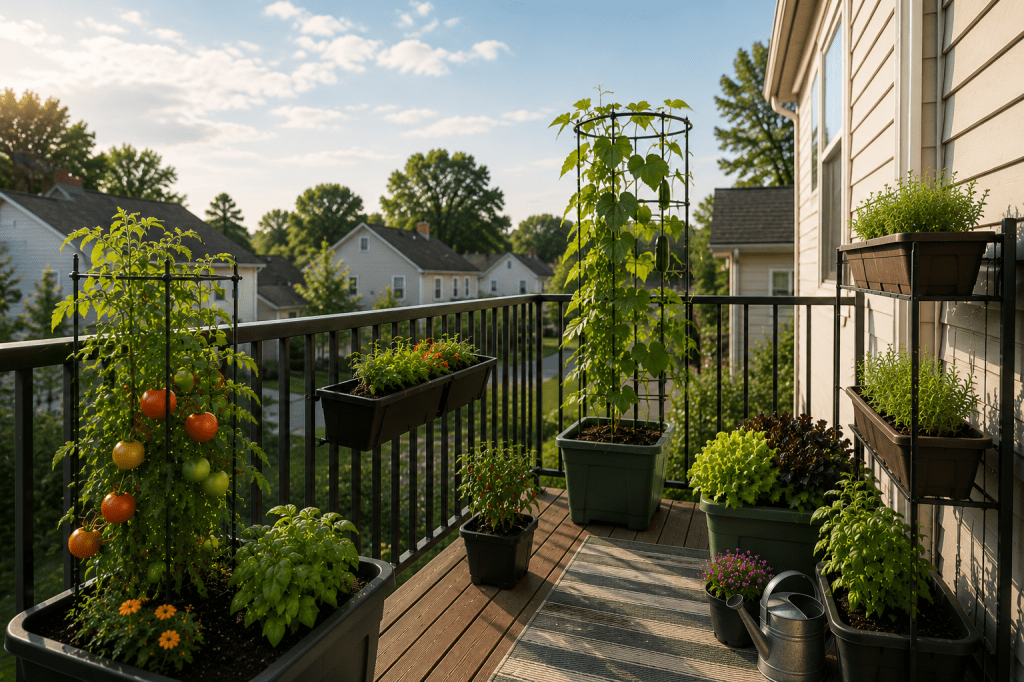
But they haven’t.
They’ve simply reached the point where vertical gardening becomes the advantage.
Vertical space is one of the most underused resources in small gardens. Walls, railings, fences, and even the air above containers often sit empty, while plants below compete for room. When gardeners begin to think upward instead of outward, productivity changes quickly—and often dramatically.
Gary’s Garden Note
When ground space runs out, opportunity usually starts above eye level.
Why Vertical Gardening Works So Well
Vertical gardening isn’t a modern trick or a space-saving gimmick. It’s a reflection of how many plants naturally grow.
In the wild, plants compete for light. Some grow tall and rigid. Others sprawl. Many climb. Vines, tendrils, and flexible stems evolved specifically to move upward through surrounding vegetation in search of sunlight.
When gardeners provide support, they’re not forcing plants into unnatural behavior. They’re cooperating with plant biology.
Vertical growing works because:
- Improvement light distribution across the plant
- Increasement airflow through foliage
- Leaves kept drier after rain or irrigation
- Reduced disease pressure
- Harvest made easier and cleaner
In small gardens, those benefits stack quickly.
Gary’s Garden Note
Vertical gardening succeeds because it follows the plant’s instincts.
The Productivity Advantage of Growing Up
One of the biggest misconceptions about vertical gardening is that it’s only about saving space.
In reality, vertical systems often increase yield, not just efficiency.
When plants grow upward:
- Leaves receive more even light
- Flowers are more accessible to pollinators
- Fruits stay cleaner and rot less
- Plants are easier to monitor and manage
A cucumber vine grown vertically often produces better-shaped fruit and continues producing longer than one allowed to sprawl. Tomatoes trained upward are easier to prune, inspect, and harvest.
Vertical gardening doesn’t just fit more plants into a space—it helps those plants perform better.
Crops That Naturally Belong in Vertical Systems
Not every crop needs vertical support, but many benefit greatly from it.
The most obvious candidates are vining and climbing plants:
- Cucumbers
- Pole beans
- Peas
- Indeterminate tomatoes
- Some squash and melons (with adequate support)
Even semi-upright plants often perform better with light vertical guidance, especially in containers where space is limited.
Gary’s Garden Note
If a plant sprawls when left alone, it’s asking for support.
Start Vertical Planning Early
One of the most common mistakes gardeners make is waiting too long to install supports.
By the time a plant begins to sprawl, stems are already tangled, brittle, or stressed. Redirecting mature growth often causes breakage and slows production.
Successful vertical gardening begins before the plant needs it.
Supports should be:
- Installed at planting or shortly after
- Tall enough for mature growth
- Securely anchored to containers or structures
When supports are in place early, plants transition naturally into vertical growth without interruption.
Gary’s Garden Note
It’s easier to guide a young plant than rescue an old one.
Choosing Supports That Actually Work
Vertical supports don’t need to be elaborate. They need to be strong, stable, and boring.
Container-grown plants become top-heavy quickly, especially once they begin fruiting. A support that looks sturdy early in the season may fail just when plants are at peak production.
Reliable vertical supports include:
- Heavy-duty tomato cages
- Trellises anchored directly to containers
- Stakes with horizontal cross ties
- Fence panels or wire grids
- Rigid netting attached to solid frames
Lightweight or decorative supports often collapse under real garden conditions.
Gary’s Garden Note
A support that never draws attention is usually doing its job.
Training Plants: Guidance, Not Force
Training plants vertically is not about control. It’s about gentle direction.
Most plants will climb, lean, or attach themselves if given something to grab. Occasionally, they need encouragement—especially early in the season.
Good training practices include:
- Using soft ties that won’t damage stems
- Tying loosely and adjusting often
- Redirecting growth early rather than later
- Checking ties weekly during rapid growth
Plants grow quickly when conditions are right. What fit comfortably last week may become restrictive in a few days.
Gary’s Garden Note
If you’re checking your plants, check the ties too.
Vertical Gardening Improves Plant Health
One of the most overlooked benefits of vertical gardening is improved plant health.
When foliage is lifted:
- Air moves more freely
- Leaves dry faster
- Disease pressure decreases
- Insects have fewer protected hiding places
This doesn’t eliminate pests or disease, but it shifts conditions in favor of the plant—and often that’s enough.
Vertical gardening is preventative care, not reactive treatment.
Using Vertical Space Beyond Vines
Vertical gardening isn’t limited to climbing crops.
Urban gardeners can also use:
- Wall-mounted planters for herbs and greens
- Railing planters on balconies
- Tiered shelving units for small containers
- Hanging baskets in sunny locations
These approaches turn unused vertical surfaces into productive growing areas without expanding the footprint.
Gary’s Garden Note
Vertical gardening isn’t about height — it’s about efficiency.
Stability and Safety Matter
Vertical systems add height—and height adds risk.
Tall, fruit-laden plants can catch wind. Containers can tip. Supports can fail.
Good vertical systems prioritize:
- Wide container bases
- Adequate weight
- Secure anchoring
- Placement away from high-traffic areas
A collapsed support late in the season often causes irreparable damage.
Gary’s Garden Note
Stability protects the harvest you haven’t picked yet.
Vertical Gardening as a Long-Term Strategy
Once gardeners experience the benefits of vertical growing, it becomes a permanent part of their approach.
Harvesting is easier. Plants stay healthier. Space feels less limiting. Gardens feel intentional rather than crowded.
Vertical gardening isn’t a trick. It’s a core strategy for making small gardens productive and manageable.
Thinking in Three Dimensions
The most productive urban gardens don’t just fill space — they layer it.
When containers on the ground are paired with vertical supports above them, gardeners effectively double or triple usable growing area. This layered approach defines successful small-space gardens.
Urban farming thrives when gardeners stop asking, “Where can I put another pot?” and start asking, “What space isn’t working yet?”
Gary’s Garden Note
Productivity increases when gardens grow in all directions.
Looking Ahead
Once vertical space is working for you, the next step is strengthening the plants themselves. Strong vertical systems rely on healthy transplants, plants that are ready to grow upward from the very beginning.
That’s where we turn next.
Quick Takeaways
- Vertical growing increases yield without increasing footprint.
- Many vining crops perform better when supported.
- Vertical systems improve airflow and reduce disease issues.
- Early support prevents tangled plants later.
- Walls, railings, and fences are valuable growing space.
- Sturdy supports are critical for container plants.
Gary’s Garden Note
Plants want to climb—it’s our job to give them something worth climbing.
Urban Farm Checklist: Vertical Gardening
☐ Identify crops that benefit from vertical support
☐ Install trellises or cages early in the season
☐ Secure supports firmly to containers or structures
☐ Use soft ties to avoid stem damage
☐ Check supports weekly as plants grow
☐ Keep vines trained upward, not outward
☐ Harvest regularly to reduce plant stress
Vertical gardening changes how space is used, but the quality of the plants themselves still matters. Strong growth starts long before plants are set into containers or trained upward.
For gardeners who want full control over their success, it begins with starting their own plants.

