

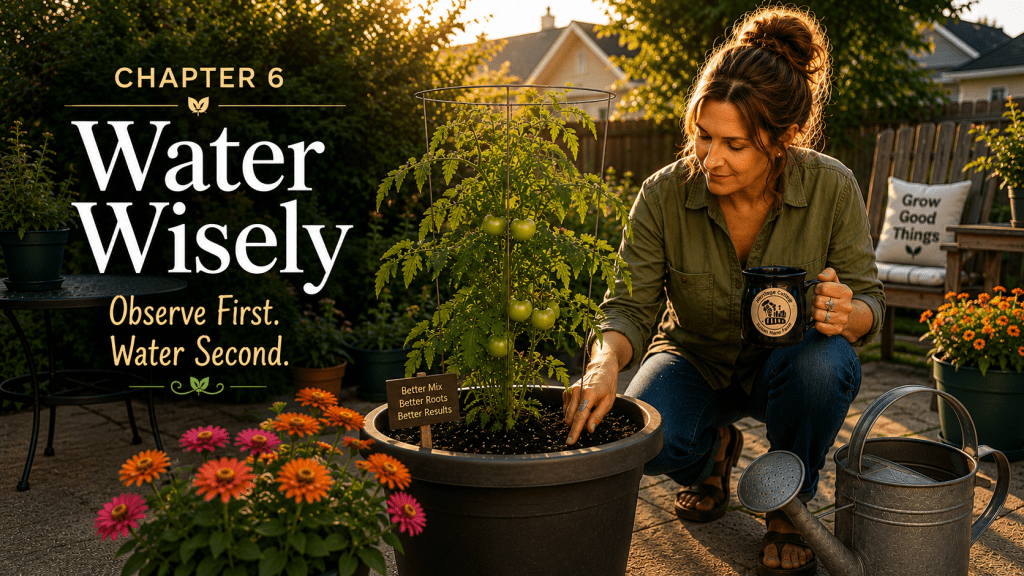
The Urban Farm: Chapter 6
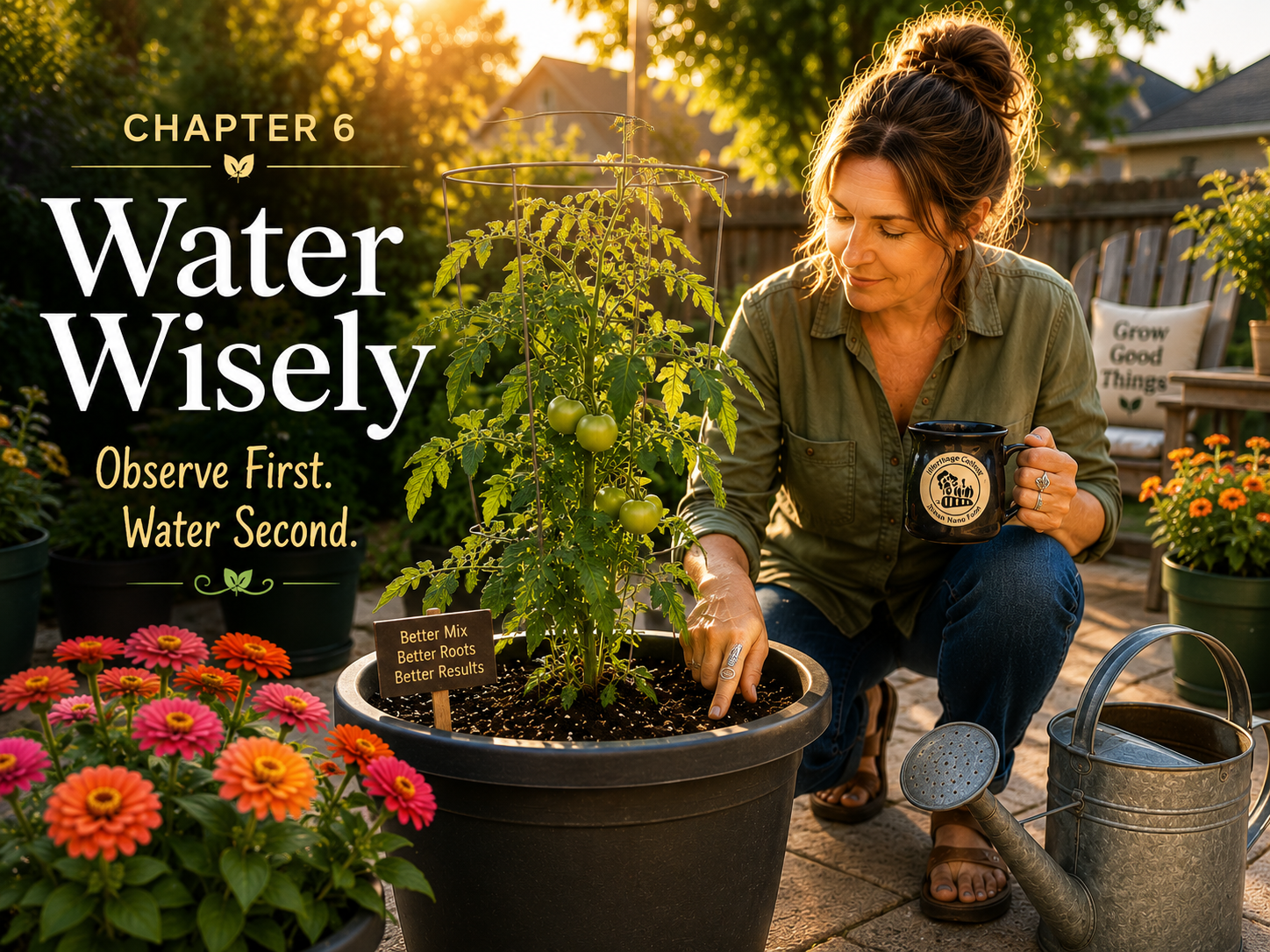
In container gardens, water is more than maintenance — it is the difference between steady growth and constant struggle. Water is where many container gardens succeed—or fail.
Container gardening has a single point of success or failure.
Not fertilizer.
Not sunlight.
Not even container size.
It’s water!
Water determines how nutrients move, how roots grow, how plants cool themselves, and how resilient they are during stress. In container gardens, water is the system that connects everything else.
Most problems gardeners experience from yellow leaves, poor growth, blossom drop, bitter harvests, can be traced back to watering issues. Often, those issues aren’t dramatic. They build slowly, quietly, and consistently.
Understanding how water behaves in containers turns watering from a guessing game into a skill.
Gary’s Garden Note
Plants rarely fail suddenly — water problems develop over time.
Why Water Behaves Differently in Containers
Containers change the physics of water.
In the ground, water spreads laterally and vertically. Roots follow moisture deep into the soil profile. Garden soil acts as a reservoir, buffering dry periods and absorbing excess water.
Containers eliminate that buffer.
In containers:
· Water enters quickly
· Water drains quickly
· Root zones are shallow and confined
· Temperature swings are more extreme
This means container plants experience water stress sooner and more frequently than in-ground plants. Both drought and saturation happen faster.
The goal isn’t to keep the container mix wet or dry. The goal is consistent moisture.
Gary’s Garden Note
Containers don’t need more water — they need better timing.
The Myth of the Perfect Watering Schedule
Many gardeners want a schedule.
Every morning. Every other day. Three times a week.
Unfortunately, plants don’t follow calendars.
Water needs change constantly based on:
· Temperature
· Wind
· Humidity
· Plant size
· Growth stage
· Container size and material
A container that needs water daily in July may only need watering twice a week in April. The schedule that worked last week may fail this week.
Successful container gardeners replace schedules with observation.
Learning to Read the Container Mix
The simplest and most reliable watering tool isn’t a meter—it’s your finger.
Checking soil just below the surface tells you far more than looking at the top of the container. Dry container mix on the surface doesn’t always mean dry roots. Moist mix below means roots still have access to water.
A quick check prevents both overwatering and underwatering.
Gary’s Garden Note
The soil always tells the truth — if you check it.
Watering Deeply Builds Better Roots
One of the most common container gardening mistakes is shallow watering.
A light splash wets the surface but leaves the root zone dry. Plants respond by growing shallow roots near the surface, making them more vulnerable to heat stress and drought.
Deep watering means applying enough water so that:
· The entire soil profile becomes moist
· Excess water drains from the bottom
· Salts and unused nutrients are flushed
Deep watering encourages roots to grow throughout the container, increasing stability and resilience.
Gary’s Garden Note
Deep roots make forgiving plants.
Drainage and Watering Are a Paired System
Good watering cannot exist without good drainage.
If water cannot leave the container, oxygen cannot enter the root zone. Saturated soil suffocates roots, even if watering is infrequent.
That’s why drainage holes—or overflow systems in sub-irrigated containers—are essential. Water must move through the container, not linger in it.
No amount of careful watering can compensate for poor drainage.
How Container Material Affects Water Use
Not all containers dry out at the same rate.
· Plastic containers retain moisture longer
· Fabric grow bags dry out quickly
· Unglazed clay pots wick moisture through the sides
· Metal containers heat rapidly and increase evaporation
Understanding container material helps anticipate water needs and prevent stress.
Gary’s Garden Note
Know your containers — they control the pace of drying.
Morning vs. Evening Watering
Watering time matters less than consistency, but timing can influence plant health.
Morning watering:
· Allows foliage to dry quickly
· Prepares plants for heat stress
· Reduces disease pressure
Evening watering can be useful during extreme heat but increases the risk of prolonged leaf wetness.
Whenever possible, water early in the day.
Drip Irrigation: Consistency Without Effort
Drip irrigation is one of the most effective tools for container gardens.
Drip systems:
· Deliver water directly to the root zone
· Reduce evaporation
· Improve uniformity
· Minimize foliage wetting
For gardeners managing many containers, drip irrigation removes daily guesswork and improves reliability.
Timers add another layer of consistency. They don’t replace observation—but they prevent missed waterings.
Gary’s Garden Note
Automation supports good habits — it doesn’t replace them.
Self-Watering Containers as a Safety Net
Sub-irrigated or self-watering containers store water in a reservoir below the soil. Moisture moves upward as plants need it.
These systems:
Buffer short dry periods
Improve moisture consistency
Reduce daily labor
Increase tolerance for heat
Gary’s Garden Note
But, these containers don’t lessen the amount of water used or reduce frequency of watering.
Adjusting Water as Plants Grow
Water needs increase as plants grow.
Small transplants use little water. Mature plants with flowers and fruit use far more. During peak production, consistent moisture becomes critical.
Heat waves, windy days, and long summer afternoons accelerate water loss. Containers that were stable in spring may dry out daily in midsummer.
Good gardeners adjust rather than assume.
Recognizing Water Stress Early
Water stress shows up in many ways.
Underwatered plants may:
Wilt during heat
Drop flowers or fruit
Produce bitter or tough harvests
Overwatered plants may:
Yellow slowly
Grow weakly
Develop root diseases
Attract pests
When plants look “off,” water should be evaluated before fertilizer or pesticides.
Gary’s Garden Note
When in doubt, check moisture first.
Water Quality Matters Too
Water isn’t just moisture—it carries minerals and salts.
Hard water, softened water, or water high in dissolved salts can accumulate in containers over time. Occasional deep flushing with clean water helps remove buildup and protect roots.
Rainwater, when available, is often ideal.
Water as a Skill, Not a Chore
Watering is not busywork. It’s one of the most important skills an urban gardener develops.
As you spend time with your containers, you’ll notice patterns:
Which containers dry fastest
Which hold moisture longer
How weather changes needs
That awareness builds confidence—and confident gardeners grow better plants.
Building a Watering Routine That Works
A good watering routine:
Fits your schedule
Matches your containers
Adjusts to weather
Allows for observation
There is no perfect routine. There is only one you can maintain consistently.
Gary’s Garden Note
The best routine is the one you’ll actually follow.
Quick Takeaways
Containers dry out faster than in-ground gardens.
Inconsistent watering causes many plant problems.
Water deeply until excess drains from the container.
Drip irrigation improves consistency and efficiency.
Self-watering containers help buffer heat and drought.
Checking soil moisture is more reliable than a schedule.
Gary’s Garden Note
Plants don’t care what day it is—they care how dry the soil is.
Urban Farm Checklist: Water Management
☐ Check soil moisture regularly with the finger test
☐ Water thoroughly, not just the surface
☐ Avoid letting containers dry completely
☐ Use mulch where appropriate to reduce evaporation
☐ Install drip irrigation if managing many containers
☐ Use timers to maintain consistency
☐ Adjust watering during heat waves and rain events
Water moves nutrients through the container and into the plant. Without proper nutrition, even perfectly watered plants eventually stall. To keep container gardens productive, nutrition is part of the system.
In the next chapter, we’ll look at how to feed container plants effectively—without excess, confusion, or waste—and how water and nutrition work together as a system.

