


The Urban Farm: Chapter 8
Healthy, well-fed plants attract attention — and learning how to respond calmly keeps small problems from becoming big ones.
If you grow vegetables, you will see insects.
At some point in every garden season, something unexpected shows up.
A hole in a leaf.
A cluster of insects under a stem.
A plant that looked fine yesterday and suddenly doesn’t.
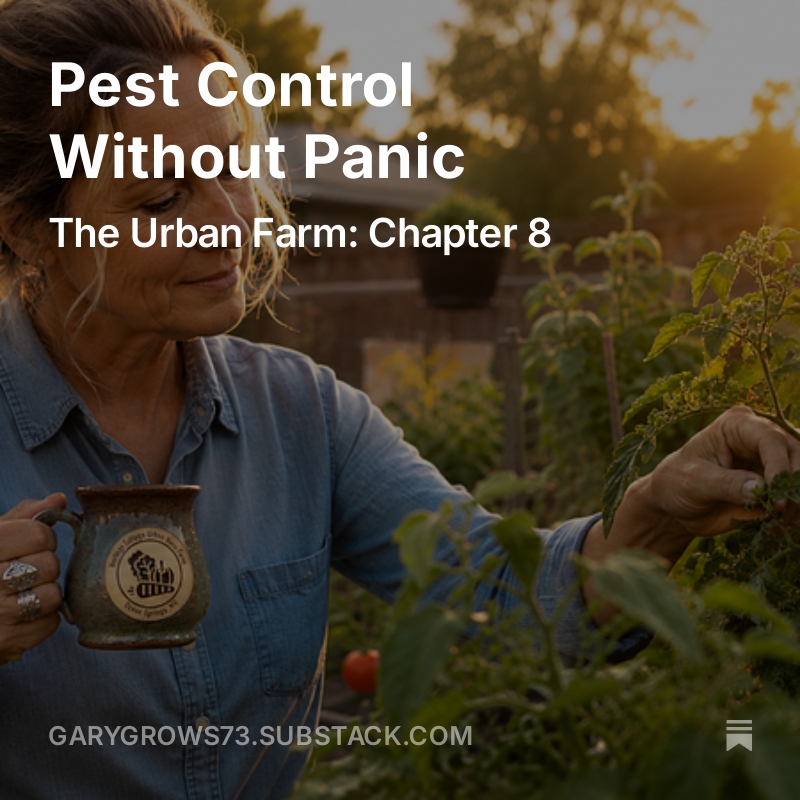
For many gardeners, that moment triggers panic. They assume disaster is imminent. They reach for sprays, treatments, and drastic solutions—often before understanding what’s actually happening.
In container gardens, panic is rarely helpful.
Most pest problems begin small. They develop gradually. And when addressed early and calmly, they’re usually manageable without extreme measures. The goal of pest control in an urban farm isn’t elimination—it’s balance.
Gary’s Garden Note
Most garden pests are problems of attention, not emergencies.
Why Pest Pressure Feels Higher in Containers
Container gardens feel more vulnerable because everything is close together.
Plants are visible. Leaves are at eye level. Changes are noticed quickly. This can create the impression that pests are worse in containers than in traditional gardens.
In reality, container gardens often experience less pest pressure—when managed well.
Containers:
- Improve airflow
- Allow better inspection
- Make isolation easier
- Reduce soil-borne pest issues
The key difference is visibility. In containers, problems are harder to ignore—and that’s an advantage.
Gary’s Garden Note
Seeing pests early is a gift, not a failure.
Not All Insects Are the Enemy
One of the most common mistakes gardeners make is assuming every insect is a pest.
Most insects in the garden are neutral or beneficial. Some pollinate. Some prey on pests. Others simply pass through without causing damage.
Effective pest management starts with identification.
Before taking action, ask:
What insect is this?
What stage of its life cycle am I seeing?
Is it actually causing damage?
Reacting without identifying the problem often creates bigger issues than the pests themselves.
Gary’s Garden Note
You don’t solve a problem you haven’t named correctly.
Understanding Damage Thresholds
A perfectly untouched plant is rare—and unnecessary.
Plants can tolerate some damage without affecting yield or health. A few chewed leaves rarely matter. Minor cosmetic issues often resolve themselves as plants grow.
The goal isn’t perfection.
The goal is productivity.
Understanding damage thresholds helps gardeners decide when action is needed and when observation is enough.
Gary’s Garden Note
Leaves don’t have to be pretty to be productive.
The Most Common Container Garden Pests
While pest populations vary by region, certain insects show up repeatedly in container gardens.
Aphids
Small, soft-bodied insects that cluster on new growth. They feed by sucking plant juices and reproduce quickly.
Aphids are often controlled naturally by predators, but early infestations can be knocked back easily with water sprays or insecticidal soap.
Spider Mites
Tiny pests that thrive in hot, dry conditions. They cause stippling and yellowing on leaves.
Spider mites dislike humidity. Regular monitoring and occasional rinsing of foliage can suppress outbreaks.
Whiteflies
Small flying insects found on the undersides of leaves. They weaken plants over time.
Sticky traps help monitor populations, and targeted treatments work when applied early.
Caterpillars
Chewing pests that can cause rapid defoliation.
Hand removal is often effective in container gardens, especially when infestations are caught early.
Gary’s Garden Note
In small gardens, your hands are often the best tool.
Why Healthy Plants Resist Pests Better
Strong plants tolerate pests better than stressed ones.
Plants under water stress, nutrient imbalance, or root restriction produce weaker tissues that pests exploit easily. Healthy plants grow quickly enough to outpace minor damage.
That’s why pest control doesn’t start with sprays—it starts with good growing conditions.
Gary’s Garden Note
The best pest control is a thriving plant.
Prevention Through Observation
Observation is the foundation of pest management.
Regularly looking at plants—especially undersides of leaves, new growth, and stems—allows problems to be addressed early. Early intervention is almost always simpler and gentler.
Five minutes of observation a few times a week can prevent weeks of frustration later.
Gary’s Garden Note
Gardens reward attention more than reaction.
Physical and Mechanical Controls
In container gardens, physical controls are often surprisingly effective.
These include:
- Hand removal of insects
- Pruning infested growth
- Strong water sprays to dislodge pests
- Isolating affected containers
Because containers are portable, infested plants can be moved away from others, limiting spread.
Gary’s Garden Note
You can’t isolate problems in the ground — but you can in containers.
When and How to Use Sprays
Sometimes intervention is necessary.
When pests reach damaging levels, targeted treatments can help—but they should be used thoughtfully.
Effective spray use means:
Treating the correct pest
Targeting affected areas
Applying at appropriate times
Following label directions carefully
Broad-spectrum pesticides often harm beneficial insects and disrupt balance. In many cases, insecticidal soaps, oils, or biological controls are sufficient.
Gary’s Garden Note
Stronger isn’t better — smarter is.
Timing Matters More Than Product Choice
Sprays are most effective when applied:
- Early in an infestation
- Directly to pests
- During cooler parts of the day
Spraying stressed plants during heat often causes additional damage. Evening or early morning applications reduce risk and improve effectiveness.
Beneficial Insects Are Allies
Urban gardens often attract beneficial insects naturally.
Lady beetles, lacewings, predatory mites, and parasitic wasps all help manage pest populations. Avoiding unnecessary sprays protects these allies.
Diverse plantings—especially flowering herbs—support beneficial insects by providing nectar and shelter.
Gary’s Garden Note
Not every helper wears a label.
Understanding Cycles Instead of Fighting Them
Pest populations rise and fall naturally.
A sudden appearance doesn’t always mean a long-term problem. Weather changes, plant growth stages, and predator activity all influence insect populations.
Reacting aggressively to every fluctuation often does more harm than good.
Gary’s Garden Note
Most pest problems are temporary — if you don’t make them permanent.
When to Let Nature Work
Sometimes the best decision is to wait.
If plants are healthy and damage is limited, observation may be enough. Beneficial insects often arrive shortly after pests appear.
This patience requires confidence—but it often pays off.
Managing Pests Without Losing the Joy
Gardening should be enjoyable.
When pest management becomes stressful, it’s a sign that expectations may need adjustment. A few chewed leaves don’t mean failure. A missed insect doesn’t mean the season is lost.
Container gardening is forgiving—especially when approached calmly.
Gary’s Garden Note
Control the problem, not your enjoyment.
Building a Pest-Management Mindset
Effective pest control is:
- Observational, not reactive
- Preventative, not punitive
- Targeted, not blanket-based
It works best when integrated into everyday garden care rather than treated as a separate battle.
Confidence Comes From Experience
The first pest encounter often feels overwhelming. The second feels manageable. By the third, it’s routine.
Experience builds confidence, and confidence reduces panic.
Urban farming isn’t about eliminating challenges. It’s about learning to respond thoughtfully when they appear.
Gary’s Garden Note
Every solved problem becomes future confidence.
Quick Takeaways
Seeing insects does not mean failure.
Regular scouting prevents small problems from becoming big ones.
Physical barriers can prevent many pests.
Not all insects are harmful—some are beneficial.
Use pesticides only when damage reaches unacceptable levels.
Integrated Pest Management is about informed decisions.
Gary’s Garden Note
The earlier you notice a problem, the easier it is to fix.
Urban Farm Checklist: Pest Management
☐ Inspect plants 2–3 times per week
☐ Look under leaves and at new growth
☐ Identify pests before taking action
☐ Use physical barriers when possible
☐ Encourage beneficial insects
☐ Apply treatments only when needed
☐ Follow label directions carefully
Pest management is easier when gardeners are prepared rather than reactive. Many problems can be reduced or avoided altogether with thoughtful planning.
In small-space gardens, planning turns uncertainty into confidence. In the next chapter, we’ll focus on planning and scheduling—how to think ahead, organize the season, and turn small spaces into reliable producers
 Gary Grows at Heritage Cottage